 Posted by
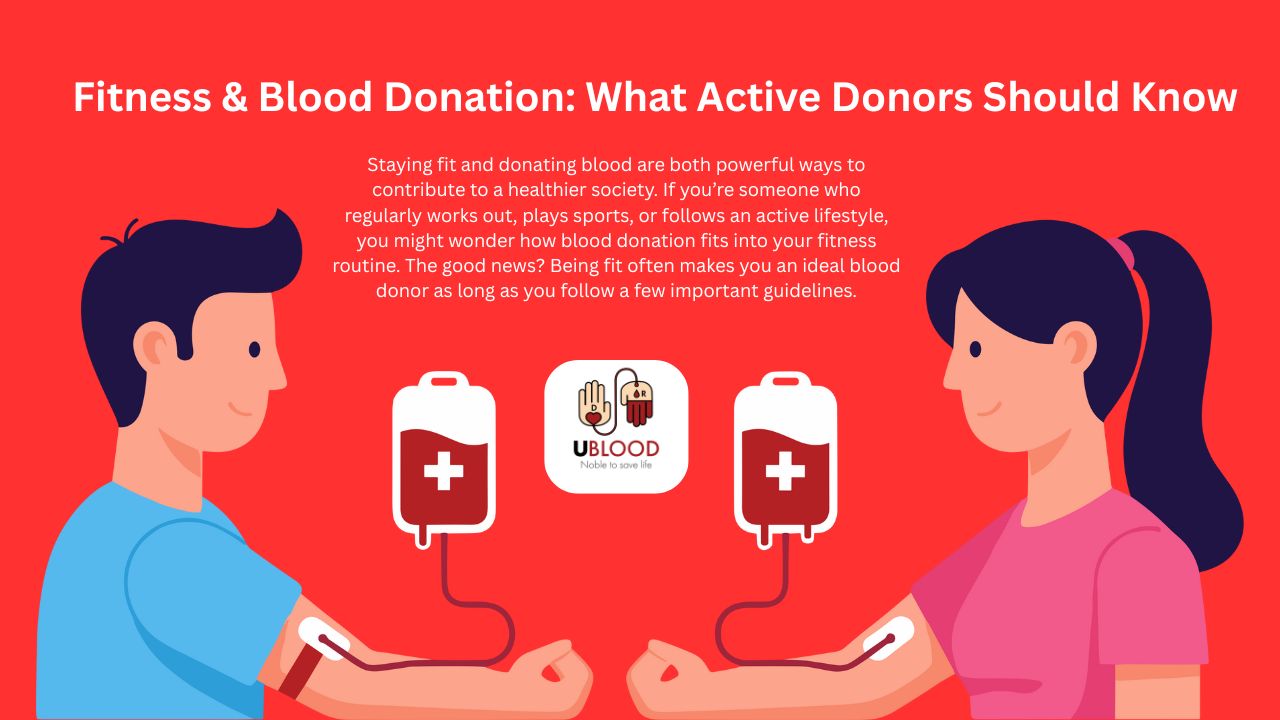
 Staying fit and donating blood are both powerful ways to contribute to a healthier society. If you’re someone who regularly works out, plays sports, or follows an active lifestyle, you might wonder how blood donation fits into your fitness routine. The good news? Being fit often makes you an ideal blood donor as long as you follow a few important guidelines.
At UBlood, we believe that informed donors are confident donors. Here’s everything active individuals need to know about balancing fitness and blood donation safely.
Why Fitness Is an Advantage for Blood Donors
People who maintain a regular fitness routine often have:
- Better cardiovascular health
- Stable hemoglobin levels
- Stronger immunity
- Faster recovery after donation
This means that physically active individuals usually tolerate blood donation well and recover more quickly when proper care is taken.
Can You Donate Blood If You Work Out Regularly?
Yes, absolutely. Regular exercise does not disqualify you from donating blood. However, timing and recovery are crucial.
You should avoid:
- Intense workouts 24 hours before donation
- Heavy lifting or endurance training 24–48 hours after donation
Light activities like walking or stretching are generally fine after donating.
Best Practices Before Donating Blood (For Active Donors)
To ensure a smooth donation experience:
- Hydrate well: Drink plenty of water 24 hours before donating
- Eat iron-rich foods: Spinach, dates, jaggery, red meat, lentils
- Get proper rest: At least 7–8 hours of sleep
- Avoid alcohol: For at least 24 hours before donation
These steps help maintain hemoglobin levels and prevent dizziness or fatigue.
What Happens to Your Body After Blood Donation?
After donating blood:
- Your body immediately begins replacing lost plasma
- Red blood cells are replenished within a few weeks
- Hemoglobin levels normalize naturally with proper nutrition
Most donors feel normal within a day, especially those who are physically fit.
When Can You Resume Your Workout?
Here’s a simple guideline:
- Same day: Rest, hydrate, avoid exertion
- Next day: Light activity (walking, yoga)
- After 48 hours: Resume normal workouts if you feel well
Listen to your body if you feel dizzy or weak; give yourself more rest.
Common Myths Active Donors Should Ignore
Myth 1: Blood donation reduces strength permanently
False. Any temporary drop is quickly recovered.
Myth 2: Athletes should not donate blood
False. Many athletes donate safely with proper timing.
Myth 3: Blood donation affects muscle mass
False. Muscle growth is unaffected when nutrition is maintained.
Who Should Postpone Donation?
You should wait before donating if you:
- Are you recovering from illness or injury?
- Have extremely low body fat or low hemoglobin
- Recently completed a marathon or intense competition
Your health always comes first.
Fitness + Donation = A Healthier Community
An active lifestyle and blood donation go hand in hand. By donating blood responsibly, fitness enthusiasts can set a powerful example showing that strength isn’t just about muscles, but about saving lives.
Be a Hero. Donate Blood with UBlood
At UBlood, we connect donors with those in urgent need, ensuring safe and timely blood availability.
Register as a blood donor today
Help save lives while staying fit
Visit www.ublood.com
Because a healthy body has the power to give life.